


 English
 Français
Nouvelles
ACCUEIL / Nouvelles / Actualités de l'industrie / Gants en Kevlar : résistance aux coupures, types, normes et comment bien choisir

Sur plus d'une ligne d'emboutissage de métaux, un responsable de la sécurité a remplacé tous les gants résistants aux coupures au sol par un tricot léger en Kevlar de calibre 18 après un quasi-accident avec un bord de cisaillement. Quelques jours plus tard, l'équipe de maintenance revient avec des poignets déchiquetés et une plainte brutale : les nouveaux gants arrêtent les coups de couteau nets mais échouent face aux bavures abrasives et aux impacts violents. La fibre n’est pas le problème ; l'architecture du gant l'est. C'est la première chose à comprendre à propos des gants Kevlar.
Les gants en Kevlar, c'est-à-dire tout gant utilisant la fibre para-aramide commercialisée pour la première fois sous la marque Kevlar au début des années 1970, sont un pilier de la protection industrielle des mains car ils résistent véritablement aux coupures, tolèrent la chaleur et surpassent la plupart des synthétiques en termes de ténacité. Pourtant, la catégorie s'étend de tout, depuis une coque tricotée délicate de calibre 21 jusqu'à un lourd gantelet de tronçonneuse renforcé de cuir. Choisir correctement parmi ces constructions est ce qui différencie un programme de sécurité réussi d’un programme qui semble simplement bon sur le papier.
Ce guide explique comment le Kevlar arrête les coupures, quels niveaux de coupure ANSI/ISEA mesurent réellement, quelles structures de gants conviennent à quelles tâches, comment le Kevlar se compare à d'autres fibres résistantes aux coupures et ce que les acheteurs doivent vérifier avant de commander auprès d'un fabricant de gants en Kevlar ou d'un fournisseur de gants de travail résistants aux coupures. Utilisez les tableaux et la liste de contrôle de sélection lorsque vous évaluez des échantillons provenant d'une usine de vente en gros de gants résistants aux coupures, et gardez la section de maintenance à portée de main une fois les gants en service.
Content
Le Kevlar est une fibre synthétique para-aramide développée par DuPont et introduite commercialement au début des années 1970. Sa structure moléculaire est constituée de chaînes polymères rigides qui s'alignent le long de l'axe des fibres, conférant au matériau une résistance à la traction environ cinq fois supérieure à celle de l'acier à poids égal. Contrairement au nylon ou au polyester, le Kevlar ne fond pas ; elle commence à se décomposer vers 450°C, c'est pourquoi la fibre apparaît aussi bien dans les armures balistiques que dans les gants résistant à la chaleur.
Le mécanisme de résistance aux coupures est différent de ce que la plupart des gens imaginent. Une lame de couteau ne « rebondit » pas sur un gant en Kevlar ; au lieu de cela, les fibres à haute résistance résistent à la force de traction créée par le bord de la lame lorsqu'elle appuie et glisse à travers le tissu. La lame doit soit briser les chaînes de polymère, soit séparer les fibres, ce qui nécessite beaucoup plus d'énergie que la coupe d'un fil de coton ou de nylon. Lorsqu'un test de coupe est effectué, la lame se déplace à plusieurs reprises sur le tissu à moins qu'elle ne soit arrêtée par le matériau, et les gants fabriqués avec du fil d'aramide arrêtent systématiquement la lame du test de coup sur des distances de déplacement bien inférieures à celles des tissus de base.
La jauge est la prochaine variable qui affecte les performances. Dans la construction de gants tricotés, la jauge fait référence au nombre de points par pouce. Un gant de calibre 7 ou 10 utilise un fil épais et un tricot ouvert et respirant, tandis qu'un gant de calibre 18 ou 21 est beaucoup plus fin et plus dense. Les gants en Kevlar de calibre inférieur sont substantiels et volumineux, ce qui facilite la manipulation de matériaux lourds ; les versions de calibre plus élevé offrent une meilleure dextérité et sont utilisées pour un assemblage de précision, mais chaque fil individuel a moins de volume, de sorte que l'indice de coupe dépend de la densité des fibres du fil et du nombre de plis qui y sont filés.
La plupart des gants en Kevlar vendus aujourd'hui ne sont pas composés à 100 % d'aramide. Les fabricants mélangent le Kevlar avec du polyéthylène haute performance, du nylon, du spandex ou du filament en acier inoxydable pour améliorer l'adhérence, le confort et la résistance aux coupures. Un gant appelé « gant Kevlar » peut contenir aussi peu que 20 à 30 % d'aramide, le reste étant une fibre porteuse moins coûteuse. La lecture de l'étiquette de composition des fibres est importante, car « l'aramide » est une chimie, pas un produit particulier, et le fil para-aramide générique d'autres producteurs peut égaler les performances du Kevlar lorsque la qualité est sélectionnée correctement.
Ce que le Kevlar fait moins bien compte aussi. Il est vulnérable à une exposition prolongée aux ultraviolets, ce qui provoque la rupture des chaînes polymères et la perte de résistance du tissu. Il est également sensible à l'eau de Javel, qui attaque la structure moléculaire, et aux surfaces abrasives qui peuvent couper ou user les filaments individuels, même si le gant résiste aux coupures nettes. Ces limitations expliquent pourquoi il existe des gants en Kevlar renforcés de cuir : le cuir supporte les charges d'abrasion et de perforation, tandis que la doublure en aramide gère le risque de coupure en dessous.
Comprendre les six architectures de gants Kevlar les plus courantes vous aide à lire les listes de produits et à comprendre le langage marketing. Le tableau ci-dessous résume les principales différences, suivi d'un examen plus approfondi de chaque type dans son contexte prévu.
Épais, lourd, très résistant ; haute tolérance à l’usure abrasive. Courant dans la manipulation du verre et dans la fabrication de métaux où la dextérité est secondaire.
Fine, ajustée, haute sensibilité tactile. Idéal pour la manipulation de petites pièces et les travaux où les travailleurs rejettent les gants encombrants.
Le revêtement en PU ou en nitrile sur le tricot aramide améliore l'adhérence sur sol mouillé et empêche les accrocs. Idéal pour les pièces huileuses, l'automobile et l'emballage.
La surface en aramide tricotée en boucle emprisonne l'air et ajoute du coussin ; souvent utilisé pour la chaleur, les vibrations et l’exposition modérée aux coupures.
Coque en cuir ou empiècements sur la paume avec doublure ou coutures en aramide. Idéal pour les travaux d’abrasion, d’impact, d’étincelles de soudage et de tronçonneuse.
Le fil Kevlar enveloppé de filaments en acier inoxydable permet de réduire les notes en A6/A7. Pour la ferraille, le recyclage et l’emboutissage lourd.
| Type de gant | Construction | Niveau de coupure ANSI typique | Tâches les mieux adaptées |
|---|---|---|---|
| Tricot Kevlar, jauge 13 | Fil d'aramide lourd, tricot ouvert | A3-A4 | Manutention du verre, fabrication de métaux légers, assemblage général |
| Tricot Kevlar, jauge 18 | Fil aramide fin, tricot dense | A4-A5 | Assemblage de précision, petits composants pointus, électronique |
| Tricot Kevlar enduit | Base aramide avec trempage PU ou nitrile | A4-A5 | Pièces huileuses ou humides, automobile, emballage, inspection |
| Tissu éponge Kevlar | Surface en aramide tricotée en boucle | A3-A4 | Proximité de la chaleur, tâches affectées par les vibrations, coupures légères |
| Aramide renforcé de cuir | Coque en cuir ou paume sur doublure en Kevlar | A4-A5 | Soudage, tronçonneuse, fabrication lourde, matériaux abrasifs |
| Kevlar avec filament d'acier | Fil hybride aramide avec enveloppe en acier | A6-A7 | Ferraille, recyclage, estampage des métaux, bords tranchants comme des rasoirs |
Lorsque vous comparez les spécifications, vérifiez trois chiffres : la jauge, l'indice de coupe ANSI/EN pour le style exact et le pourcentage de mélange de fibres. De nombreux fournisseurs répertorient uniquement la famille de fibres (« Kevlar » ou « aramide ») sans préciser si le fil est mélangé à du nylon ou du polyester, ce qui affecte directement les performances de coupe après lavage. Notez également que le même style de gants peut être répertorié comme ANSI A4 dans un lot de test et A5 dans un autre, de sorte qu'un certificat accompagnant le lot de production réel a bien plus de valeur qu'une étiquette marketing.
Chaque gant résistant aux coupures vendu dans le monde est classé soit par la norme américaine ANSI/ISEA 105, soit par la norme européenne EN 388. La norme américaine, mise à jour en 2016, a remplacé l'ancien système à un seul niveau par neuf niveaux de coupe allant de A1 à A9. Un laboratoire indépendant mesure la force nécessaire pour couper le tissu à l'aide d'une lame droite dans des conditions prescrites, et le résultat est converti en une plage de grammes de charge de coupe.
| Niveau ANSI | Plage de charge de coupe (grammes) | Matériaux typiques | Applications représentatives |
|---|---|---|---|
| A1 | 200-499 | Coton, nylon léger, cuir fin | Assemblage léger, inspection |
| A2 | 500-999 | Cuir de vachette, cuir plus épais, synthétiques de base | Manutention générale, emballage |
| A3 | 1 000 à 1 499 | Tricots Kevlar standards, tissus enduits | Manipulation du verre, pièces métalliques |
| A4 | 1 500 à 2 199 | Kevlar de calibre fin, mélanges de Kevlar | Emboutissage, travail des bords de tôle |
| A5 | 2 200 à 2 999 | Mélanges lourds en Kevlar, composites HPPE | Déchets tranchants, manipulation de câbles |
| A6 | 3 000 à 3 999 | Kevlar avec filament d'acier | Recyclage, estampage lourd |
| A7-A9 | 4 000 et plus | Composites multicouches d'aramide et d'acier | Environnements slash extrêmes |
Le tableau ci-dessous compare les niveaux de coupe ANSI typiques pour les matériaux de gants courants, y compris plusieurs constructions en Kevlar. Il s'agit d'un guide général qui ne remplace pas un certificat de test sur le style exact de gants.
Les barres horizontales montrent la bande de résistance aux coupures qu'un acheteur peut attendre de chaque famille de matériaux.
Des niveaux plus élevés signifient que le tissu du gant arrête la lame de test plus tôt, ce qui nécessite une force de coupe plus importante.
Le cuir seul se situe près de l’extrémité inférieure de l’échelle, tandis que l’aramide renforcé d’acier atteint le sommet.
C'est pourquoi l'évaluation de la construction réelle est plus importante que la lecture du mot « Kevlar » dans le nom d'un produit.
Le graphique rend trois points immédiatement visibles. Premièrement, le coton uni et le cuir standard occupent l’extrémité inférieure de l’échelle de résistance aux coupures ; un gant en cuir de vache ordinaire teste normalement autour de A2 ou A3, ce qui est suffisant pour un assemblage léger mais pas pour la manipulation de métaux tranchants. Deuxièmement, les gants tricotés en Kevlar passent dans la bande A3 à A5 en fonction du calibre et de la densité du fil, et la version plus fine de calibre 18 offre toujours une forte résistance aux coupures car le tricot plus serré répartit les forces de la lame sur davantage de points de contact du fil. Troisièmement, la combinaison du Kevlar avec des filaments d'acier pousse les notes à A6 et au-dessus, ce qui est précisément ce qu'exigent les opérations de recyclage et d'emboutissage.
Ce que le tableau ne montre pas, c’est la résistance à la perforation et à l’abrasion. Un tricot en Kevlar peut arrêter une coupure de couteau, mais ne peut pas arrêter un clou ou une perforation tranchante, c'est pourquoi un renfort en cuir est nécessaire pour de tels risques. La résistance à l’abrasion est également une propriété distincte ; les fils d'aramide peuvent s'user sur le béton brut ou sur les bords en acier non ébavurés, même lorsque le certificat de coupe du gant semble solide. C'est exactement pourquoi les gants en Kevlar renforcés de cuir sont devenus un incontournable dans les usines, car le cuir ajoute la couche d'usure abrasive tandis que le Kevlar fournit la protection contre les coupures en dessous.
Pour les acheteurs industriels, l’essentiel à retenir est que le nom du matériau n’est qu’une variable. L'épaisseur, la construction de la doublure, le revêtement, le matériau de la coque et la qualité des points modifient tous la performance finale, et une équipe d'approvisionnement devrait exiger un certificat de test pour le lot de production exact, et non s'appuyer sur une étiquette générique « Kevlar ». Dans la pratique, de nombreux gants vendus comme résistants aux coupures contiennent déjà des fibres d'aramide mélangées à d'autres fils, il est donc important de vérifier le pourcentage réel de la composition. Plus le niveau de coupe est élevé, plus le gant est généralement rigide, ce qui nous ramène à la dextérité comme priorité concurrente. Ce compromis entre la défense contre les coupures et la fatigue des mains est le problème le plus fréquemment soulevé par les responsables de la sécurité après une commande d'essai.
La norme européenne EN 388:2016 utilise une échelle différente : les lettres notées a, b, c, d et e pour le test coup d'État, plus la lettre f pour le test à lame droite ISO 13997 (TDM). Un gant classé 4X44D dans l'ancien système peut ressembler à un nouveau classement 4X44D, mais les méthodes de test ont changé et le nouveau résultat ISO 13997 est requis pour les matériaux qui envoient la lame du coup d'essai dans un état de décrochage. Lorsque votre fournisseur fournit un certificat EN 388, confirmez que le test TDM a été utilisé pour l'évaluation de la coupe, et pas seulement l'ancienne méthode de coup d'État.
Le cuir et l'aramide sont des partenaires naturels sur l'établi. Le cuir offre une résistance à l'abrasion, une structure et une adhérence qui émoussent le contact initial d'une lame, tandis que le Kevlar en dessous attrape tout ce qui pénètre dans la peau. Lors du soudage, la coque en cuir protège contre les étincelles et les éclaboussures de fusion, et la doublure en Kevlar bloque les coupures sur les bords tranchants de la pièce. Lors de la manipulation de tôles présentant des bavures, le cuir évite également les accrocs et les déchirures qu'un gant en tricot nu subit sur les bords rugueux de l'acier.
La construction hybride résout également un problème de confort. Un gant en Kevlar tricoté épais peut être en sueur et raide ; Le cuir, notamment le cuir de vachette fleur, respire plus naturellement, s'adapte à la main et développe une meilleure adhérence au fil de l'usage. Lorsqu'un gant en cuir de vache résistant aux coupures est cousu avec une doublure en aramide sur la paume, le dos ou les deux, les travailleurs ont tendance à le porter pendant des quarts de travail plus longs sans fatigue. Un temps de port plus long entraîne une meilleure conformité, ce qui est une mesure de sécurité que les services d'achat doivent suivre parallèlement au prix par paire.
Pour les acheteurs évaluant cette catégorie, les détails les plus importants sont la couverture de la doublure et la densité des points. Une doublure en Kevlar qui recouvre uniquement la paume laisse l'entrejambe du pouce et le bout des doigts exposés ; une doublure à coutures complètes est supérieure. Les coutures à double aiguille avec du fil à haute résistance empêchent également la doublure de migrer à l'intérieur de la coque, ce qui est un mode de défaillance courant dans les gants importés bon marché.
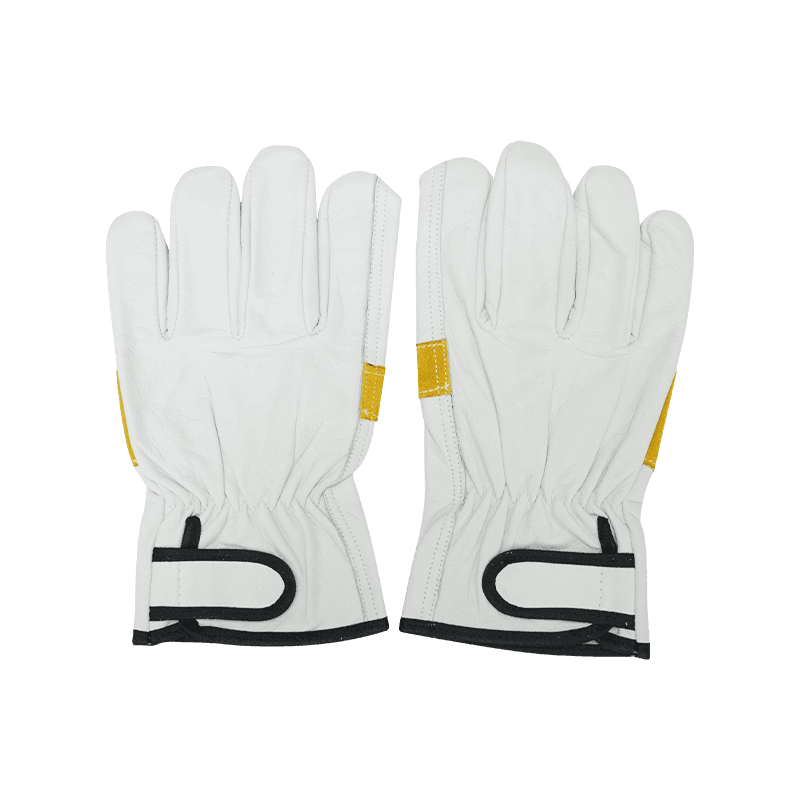
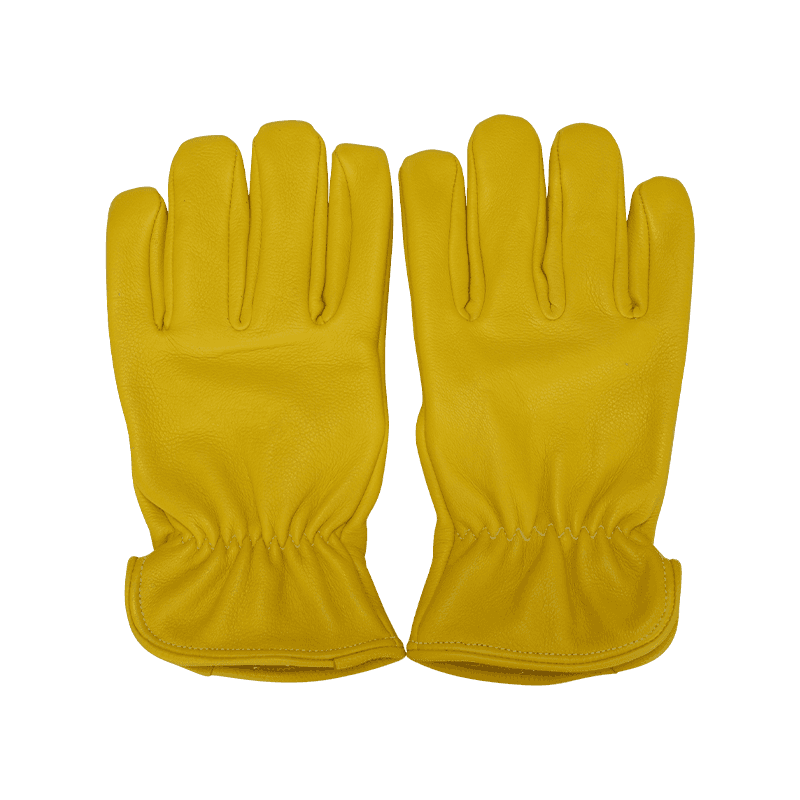 Gants de travail en cuir de vache résistant aux coupures avec doublure en aramide Ces gants combinent du cuir de vachette pleine fleur avec une doublure anti-coupure, répondant aux risques de coupure dans le travail industriel. Les acheteurs doivent vérifier la norme de résistance aux coupures et la construction de la doublure pour garantir une véritable protection. Voir le produit →
 Des fabricants tels que Nantong Qiji Glove, qui fabrique des gants de travail en cuir depuis 1988, proposent des gants en cuir de vachette résistant aux coupures qui combinent du cuir de vachette pleine fleur ou de première qualité avec des matériaux de protection contre les coupures dans une seule construction cousue. Lorsque vous achetez ce type de gant auprès d'une usine, demandez quelle norme de résistance aux coupures a été testée, si la doublure est un véritable fil de Kevlar ou un tissu d'aramide mélangé, et si le poignet est élastiqué ou renforcé pour un port à enfiler. Ces trois réponses vous indiquent si le gant a été conçu pour un risque réel de coupure ou s'il est simplement étiqueté à cet effet.
Un hybride spécifique qui mérite une attention particulière est le gant pour tronçonneuse. Les normes de protection contre les tronçonneuses, telles que la norme EN 381-7, exigent une couche spécifique de matériau résistant aux coupures sur le dos et la main gauche pour arrêter une chaîne de tronçonneuse à grande vitesse. Les coques en cuir avec rembourrage en aramide constituent la construction standard de l'industrie, car le cuir résiste à l'abrasion de la chaîne et les fibres d'aramide se coincent dans le pignon d'entraînement de la scie. Un gant en cuir ordinaire n'offre aucune protection contre les tronçonneuses et un gant tricoté en aramide n'offre pas la couverture nécessaire ; seul un gant de tronçonneuse dédié avec un rembourrage certifié dans les zones appropriées doit être utilisé pour cette tâche.
La sélection des bons gants en Kevlar commence par un inventaire des dangers, et non par une préférence de marque. Parcourez la cellule de travail et classez ce que la main du travailleur touche réellement : arêtes vives, surfaces abrasives, pièces huileuses, chaleur ou impact. Le tableau ci-dessous présente les scénarios courants pour les constructions de gants recommandées et répertorie les spécifications que vous devez vérifier avant d'acheter.
| Scénario de travail | Risque principal | Gant recommandé | Que vérifier |
|---|---|---|---|
| Emboutissage et fabrication de métaux | Entaille, impact, abrasion | Gant en cuir anti-impact avec doublure en Kevlar | ANSI A4, dos de la main résistant aux chocs |
| Manipulation du verre et de la céramique | Slash, adhérence sur sol mouillé | Tricot Kevlar enduit (PU or nitrile) | A3 et adhérence du revêtement |
| Fonctionnement de la tronçonneuse | Coupe à grande vitesse, vibration | Gant de tronçonneuse en cuir avec rembourrage en aramide | Conformité EN 381-7, couverture arrière gauche |
| Soudage et travail à chaud | Coupure, chaleur, étincelles, éclaboussures fondues | Gant de soudage en cuir de vache avec doublure en Kevlar | Résistance aux flammes, A4, longueur du brassard |
| Tri et recyclage des déchets | Coupure grave, perforation | Gant Kevlar avec filament d'acier | A5 et couche anti-crevaison |
| Assemblage de précision | Coupes légères, dextérité exigée | Tricot Kevlar de calibre 18 ou 21 | A3 minimum, coupe ajustée, faible fatigue des mains |
Dans l'emboutissage des métaux, le risque dominant est une combinaison d'arêtes vives de la tôle et d'impacts répétés contre les matrices. Un gant en tricot fin n'offre aucune protection contre les chocs, tandis qu'un gant en cuir standard peut ne pas offrir une protection suffisante contre les coupures. Le bon choix est un modèle résistant aux coupures et aux chocs, comme les gants en cuir de vachette résistants aux coupures utilisés dans les ateliers de presse automobile, qui placent un coussinet absorbant les chocs sur le dos de la main sur une paume et une doublure résistantes aux coupures. La priorité de la vérification est l'indice d'impact, demandez donc au fournisseur la norme EN 13594 ou les données d'essai d'impact si disponibles.
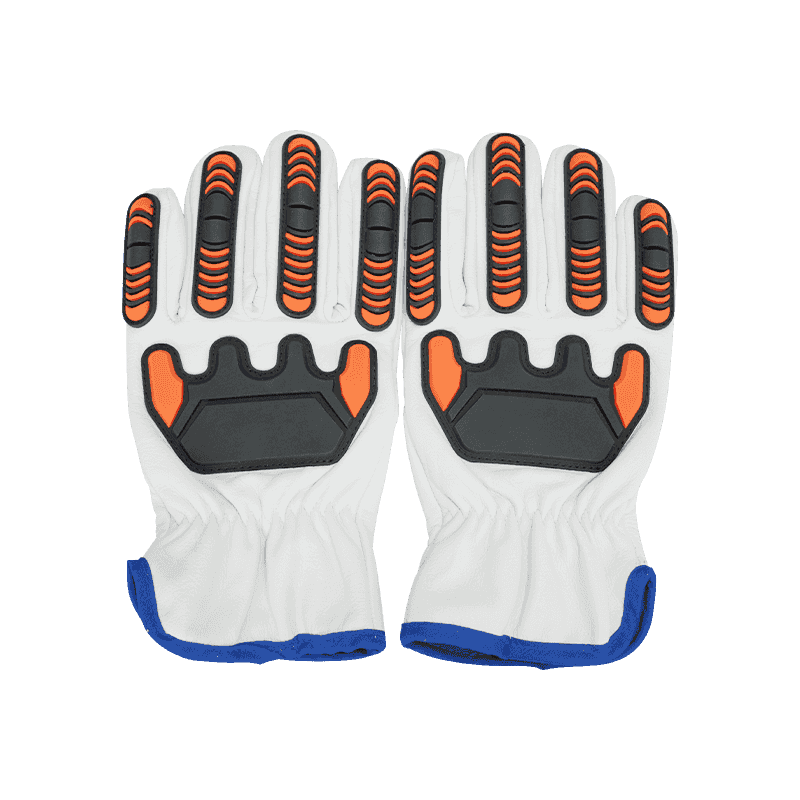 Gants en cuir de vache résistant aux coupures et aux chocs Conçus pour les tâches d'estampage des métaux et d'atelier de pressage, ces gants ajoutent un rembourrage absorbant les chocs sur le dos de la main sur une paume et une doublure en cuir de vache résistant aux coupures, aidant ainsi à réduire les risques d'impact et de coupure. Voir le produit →
 Pour les équipes de tronçonneuses, rien ne remplace un gant conforme à la norme EN 381-7. La coque en cuir résiste à l'abrasion et la couche d'aramide emprisonnée empêche la chaîne de tirer la main dans le guidon. Ne laissez pas une étiquette « gant de travail résistant aux coupures pour scie à chaîne » remplacer le certificat de la norme EN actuelle ; Certains gants résistants aux coupures à usage général prétendent être adaptés aux tronçonneuses sans répondre aux exigences spécifiques en matière d'énergie et de couverture de la norme.
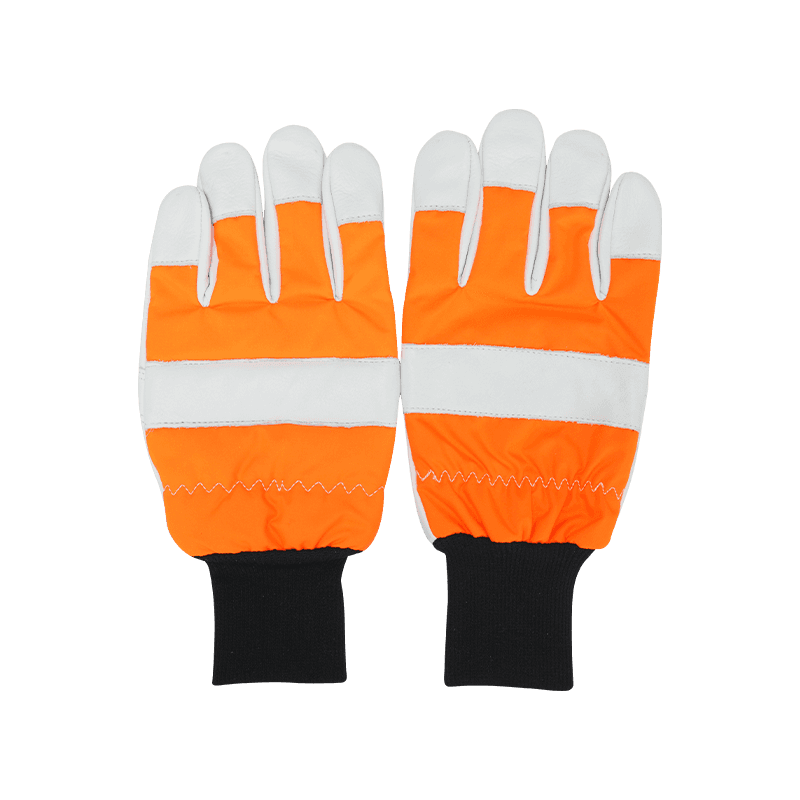 Gants de travail en cuir de vache résistant aux coupures pour tronçonneuse Conçus pour les opérateurs de tronçonneuses, ces gants en cuir de vache comportent un matériau anti-coupure supplémentaire sur le dos de la main gauche et sont destinés à répondre à des normes de sécurité spécifiques. Confirmer la conformité à la norme EN 381-7 avant utilisation. Voir le produit →
 En soudage, un gant de soudage en cuir de vache avec une doublure en Kevlar gère à la fois les risques thermiques et de coupure. Le cuir rejette les étincelles et les brefs contacts avec les flammes, tandis que la doublure empêche les coupures causées par les bords métalliques tranchants du banc. La longueur du brassard compte également ; un gantelet étendu protège le poignet et l'avant-bras. Le soudage TIG, en particulier, bénéficie d'un gant plus fin et plus tactile qui porte toujours une couche d'aramide, et de nombreux fournisseurs proposent une version TIG dédiée.
Les environnements de recyclage et de tri des déchets constituent l’épreuve la plus difficile. Les objets pointus, les éclats de verre, les aiguilles et les emballages abrasifs contaminés apparaissent tous dans le même bac, et aucun matériau ne couvre à lui seul tous les risques. La recommandation typique est un gant en Kevlar avec un filament d'acier classé au moins A5, porté avec une doublure séparée résistante à la perforation en cas de risque d'aiguille ou de fil. L'achat d'un seul gant « universel » pour ce secteur entraîne généralement des performances compromises sur l'un ou l'autre risque.
Enfin, c’est dans l’assemblage de précision que la dextérité l’emporte sur la coupe brute. Un tricot Kevlar de calibre 21 peut être classé aussi bas que A3, mais son retour tactile permet aux travailleurs de manipuler de petites vis, des clips et des fils fins sans retirer le gant. Dans ce contexte, rendre obligatoire le port de gants A6 est contre-productif car les travailleurs se débarrasseront de leurs gants volumineux à la première occasion. Choisissez le niveau de coupe minimum qui correspond à l'exposition réelle des bords, puis maximisez le confort.
Les fibres d'aramide sont en concurrence sur le marché de la résistance aux coupures avec le polyéthylène haute performance, le polyéthylène à poids moléculaire ultra élevé, les fils à âme d'acier et les mélanges de fibres de verre. Chaque chimie a un profil de résistance différent, et le meilleur fournisseur de gants ne peut recommander le bon que lorsque l'acheteur divulgue l'application réelle, et pas seulement le niveau de coupe souhaité.
| Matériel | Résistance aux coupures | Résistance à la chaleur | Dextérité | Durabilité | Coût relatif |
|---|---|---|---|---|---|
| Kevlar (aramide) | Élevé | Excellent (ne fond pas) | Bien | Bien | Moyen-élevé |
| HPPE/UHMWPE | Élevé | Faible (fond à ~150°C) | Excellent | Modéré | Moyen |
| Fil à âme d'acier | Très élevé | Faible (conduit la chaleur) | Mauvais à passable | Élevé | Moyen |
| Mélange de fibres de verre | Modéré-high | Bien | Foire | Modéré (fiber itch) | Faible |
| Cuir uniquement | Faible-moderate | Bien | Modéré | Élevé | Moyen |
Le polyéthylène haute performance (HPPE), vendu sous des marques telles que Dyneema, est le concurrent le plus proche du Kevlar dans le segment des gants coupés. Les tricots HPPE sont nettement plus doux et plus confortables, et ils peuvent atteindre les normes ANSI A4 à A6 avec une jauge fine et une bonne flexibilité. Cependant, les fibres HPPE fondent à des températures bien inférieures à 200°C, ce qui les rend impropres au soudage, aux travaux de fonderie ou à toute tâche impliquant une chaleur éclair. Le Kevlar, en revanche, reste structurel bien au-delà de 300°C et constitue le choix naturel pour les environnements de chaleur et de coupe.
Le fil à âme d'acier, qui enroule des filaments en acier inoxydable autour d'une âme telle que du nylon ou de l'aramide, pousse la résistance aux coupures dans la gamme A6 à A9 et résiste aux graves menaces de coupures. Le compromis est le poids et la dextérité ; les gants en fil d'acier sont rigides et inconfortables pour les travaux de précision. Ils conduisent également la chaleur et le froid, ils ne conviennent donc pas aux travaux électriques ou à l’exposition à des températures extrêmes. La plupart des acheteurs réservent les gants en aramide renforcé d'acier au tri et au recyclage des déchets, où le risque de coupure est extrême et le confort secondaire.
Les fils mélangés capturent le meilleur de deux matériaux. Un mélange courant est composé de 50 % de Kevlar et de 50 % de HPPE, qui préserve une bonne tolérance à la chaleur et une bonne résistance aux coupures tout en ajoutant le toucher plus doux du polyéthylène. Une autre option est le nylon ou l'élasthanne mélangés à de l'aramide dans des calibres plus élevés, produisant un gant abordable avec une résistance modérée aux coupures et un ajustement parfait pour les chaînes de montage. Lors de l’évaluation des devis, comparez le pourcentage de fibre et le certificat de coupe ; un gant étiqueté « Kevlar » avec une faible teneur en fibres peut tester uniquement A2, tandis qu'un mélange 50/50 d'aramide et HPPE peut atteindre A4 avec un meilleur confort.
Même une paire de gants en Kevlar haut de gamme tombera en panne prématurément si elle est lavée avec le mauvais détergent ou séchée à la lumière directe du soleil. L'aramide est chimiquement résistant à de nombreux solvants mais vulnérable à l'eau de Javel et aux rayons UV, les instructions d'entretien sur l'étiquette ne sont donc pas facultatives. Le lavage industriel à haute température raccourcit la durée de vie des fils d'aramide, et l'ajout d'eau de Javel accélère la dégradation moléculaire d'une manière invisible jusqu'à ce que le tissu se déchire sous la charge.
Lavez les gants en Kevlar à l'eau tiède, idéalement en dessous de 60°C, en utilisant un détergent doux au pH neutre. N'utilisez pas d'assouplissant, car son revêtement sur la surface des fibres réduit la friction entre les fils et peut diminuer la résistance aux coupures mesurée. Rincer soigneusement et sécher à l'abri de la lumière directe du soleil et des radiateurs radiants. Une armoire de séchage à air pulsé à basse température est préférable à un séchoir à gaz ou à une conduite à ciel ouvert en plein soleil.
L'inspection doit avoir lieu avant chaque changement dans les applications à haut risque. Recherchez :
Remplacez immédiatement les gants en Kevlar lorsque l'un de ces défauts apparaît. Un gant avec une coupure à travers la couche d'aramide ne satisfait plus au certificat de test de coupure d'origine, même si le reste du tissu semble en bon état. Pour les hybrides cuir et Kevlar réutilisables, suivez les recommandations d'entretien du cuir du fournisseur de gants, car les huiles de bronzage et les niveaux d'humidité affectent la flexibilité et la résistance de la coque en cuir aux dommages causés par les étincelles. Établir un calendrier de remplacement basé sur les données d'usure réelles de votre chantier ; un gant qui dure généralement six semaines en assemblage léger peut ne durer qu'une semaine dans une cellule d'emboutissage, et un fournisseur qui fabrique pour un usage industriel peut normalement vous aider à évaluer une durée de vie réaliste.
Acheter des gants en Kevlar en grande quantité est différent de choisir une paire au détail dans une étagère d'équipement de sécurité. Les acheteurs en gros, les importateurs et les distributeurs de produits de sécurité ont besoin d'un fournisseur qui dispose d'un approvisionnement stable en fibres, fournit une documentation de test et peut assurer une qualité constante sur tous les lots de production. Avant d'envoyer un bon de commande à un fournisseur de gants de travail résistants aux coupures, posez six questions spécifiques : quelle méthode de test de coupure est utilisée ; quel pourcentage de fibres apparaît dans le gant lui-même ; le certificat correspond-il exactement au style et à la gamme de tailles indiqués ? quelle est la construction du gabarit et du revêtement ; quelles recommandations de lavage et d'entretien s'appliquent ; et quelles sont les tolérances documentées concernant la longueur, la largeur de la paume et la résistance à la déchirure.
Un fabricant de gants établi tel que Nantong Qiji Glove Co., Ltd. est un exemple utile de la façon d’évaluer un partenaire. L'entreprise a été fondée en 1988 à Rugao, dans la province du Jiangsu, près de Shanghai, et a passé plus de trois décennies à produire des gants de travail en cuir, notamment des modèles fonctionnels dotés de propriétés résistantes aux coupures, aux chocs, à l'eau et à la chaleur. Sa position en tant que fabricant de gants de sécurité basé en Chine au service des acheteurs mondiaux signifie qu'il peut s'adapter à la fois à la marque OEM et aux spécifications personnalisées, ce qui est important lorsque vous avez besoin de votre propre étiquette, de votre emballage ou d'un modèle de brassard modifié pour un utilisateur final local.
Lorsque vous traitez avec un fournisseur, demandez des échantillons de pré-production et faites-les tester dans un laboratoire indépendant accrédité ISO 17025 plutôt que de vous fier aux données internes de l'usine. Les échantillons doivent être conditionnés et testés dans une atmosphère standard, et les résultats doivent citer le numéro de style réel. Négociez le MOQ (quantité minimum de commande) par rapport à vos prévisions, et non par rapport au prix de l'échantillon, car les gants résistants aux coupures en fibres d'aramide ont des longueurs minimales qui varient en fonction de la machine à tricoter, et un MOQ faible peut forcer une construction différente de celle que vous avez échantillonnée. Clarifier le délai de production et si le fournisseur peut s'engager sur une date d'inspection fixe pour les produits finis ; un fabricant qui invite une inspection par un tiers démontre sa confiance dans son processus.
Le contrôle qualité pendant le tirage est aussi important que le certificat. Vérifiez que la doublure en Kevlar, le cas échéant, est centrée et ne se déplace pas après un usage répété, que le grain du cuir est exempt de défauts majeurs sur la paume et que la densité des coutures aux points de contrainte est conforme aux spécifications. Demandez comment le fournisseur gère les lots non conformes et quelle politique de crédit ou de remplacement s'applique dans le cas où un lot de production échoue au test de coupe convenu. Des accords clairs et écrits sur ces points évitent les litiges les plus courants entre les importateurs de gants et les usines.
Vous trouverez ci-dessous les réponses aux questions que les équipes d'approvisionnement et les responsables de la sécurité posent le plus souvent lorsqu'ils comparent les options de gants en Kevlar.
Les gants en Kevlar sont-ils résistants aux coupures ?Non. Les gants en Kevlar sont résistants aux coupures, mais pas aux coupures. Une lame suffisamment tranchante avec suffisamment de force peut couper n'importe quel gant. Le niveau de coupe ANSI quantifie la force nécessaire pour couper le matériau des gants, et même les gants classés A9 ont une limite de performance. Associez toujours la sélection de gants à une protection appropriée et à des pratiques de travail sûres. |
Que signifie le niveau de coupe ANSI A4 sur un gant en Kevlar ?ANSI A4 signifie que le gant a résisté à une charge de coupe de 1 500 à 2 199 grammes lors du test standard ASTM F2992. Il s'agit d'un niveau solide pour la manipulation et l'estampage de tôles et représente généralement un tricot Kevlar bien construit ou un hybride cuir et Kevlar. Tout ce qui est inférieur à A3 n'est généralement pas considéré comme significatif pour les travaux sur les bords métalliques. |
Les gants en Kevlar peuvent-ils être lavés ?Oui, mais avec des restrictions. Utilisez de l'eau tiède à une température inférieure à 60 °C, un détergent doux neutre et sans assouplissant ni agent de blanchiment chloré. Séchez les gants à l'abri de la lumière directe du soleil et de la chaleur élevée. Un lavage répété peut réduire l'indice de coupe si un mauvais produit chimique de lavage est utilisé. Suivez donc les instructions du fabricant ou testez le processus de lavage avant de mettre en œuvre un programme de lavage à grande échelle. |
Quel est le meilleur en termes de résistance aux coupures : le Kevlar ou le polyéthylène haute performance ?Il n’y a pas de gagnant universel. Le HPPE (tel que le Dyneema) est plus doux, plus léger et plus confortable à porter toute la journée et peut atteindre des indices ANSI élevés à des épaisseurs fines. Le Kevlar est le meilleur choix en présence de chaleur, d'étincelles ou d'éclaboussures de fusion, car il ne fond pas à haute température. Pour de nombreuses applications industrielles, un mélange des deux fibres offre le meilleur équilibre entre protection contre les coupures et confort. |
Puis-je utiliser des gants en Kevlar pour souder ?Les gants en Kevlar seuls ne sont pas conçus pour un contact direct avec le soudage ; vous avez besoin d'un gant de soudage en cuir de vache, de préférence avec une doublure en Kevlar. Le cuir constitue une barrière thermique contre les étincelles et la chaleur de contact, et la doublure en Kevlar ajoute une résistance aux coupures pour les arêtes vives de la pièce. Un gant tricoté en Kevlar uni peut résister à la chaleur jusqu'à un certain point, mais ne protégera pas contre les flammes directes ou les fortes étincelles de soudage. |
Quelle est la différence entre les gants Kevlar de calibre 13 et 18 ?La jauge est le nombre de points par pouce. Un gant de calibre 13 est fabriqué avec un fil plus épais, est plus lourd et plus durable et convient aux manipulations grossières ; un gant de calibre 18 est plus fin, plus ajusté et offre une meilleure dextérité pour le travail de précision. Pour le même mélange de fibres, la jauge la plus fine a généralement un indice de coupe légèrement inférieur car chaque point individuel transporte moins de masse de fil, bien que le tricot plus serré compense en partie en répartissant la force de la lame sur davantage de points de contact. Le bon choix dépend de la question de savoir si le confort ou la durabilité brute sont plus importants dans votre application. |
Une fois que vous avez déterminé la construction et le niveau de coupe adaptés à votre cellule de travail, commandez un petit lot d'essai auprès d'un fabricant de gants en Kevlar fiable et testez-le dans des conditions de production réelles. Recueillez les commentaires des travailleurs sur le confort, l’adhérence, la température et la durée de vie du gant. Ces données d'essai sont bien plus précieuses que n'importe quelle fiche technique lorsque vous passez à une commande de gros complète.
Si vous êtes intéressé par nos produits, veuillez nous consulter
 +86-0513-68163373